
Health
SDG 3, with SDG 4 and SDG 5Wellbeing held together: NCDs, sexual and reproductive health, and mental health.
Wazi promotes holistic wellbeing through integrated interventions across non-communicable diseases (NCDs), sexual and reproductive health and rights (SRHR), and mental health. The approach combines awareness, access to services, and structured referral systems. The pillar is anchored by the Wazi Dispenser Model, with research and thought-leadership tracks running alongside it.
Three sub-areas under Health.
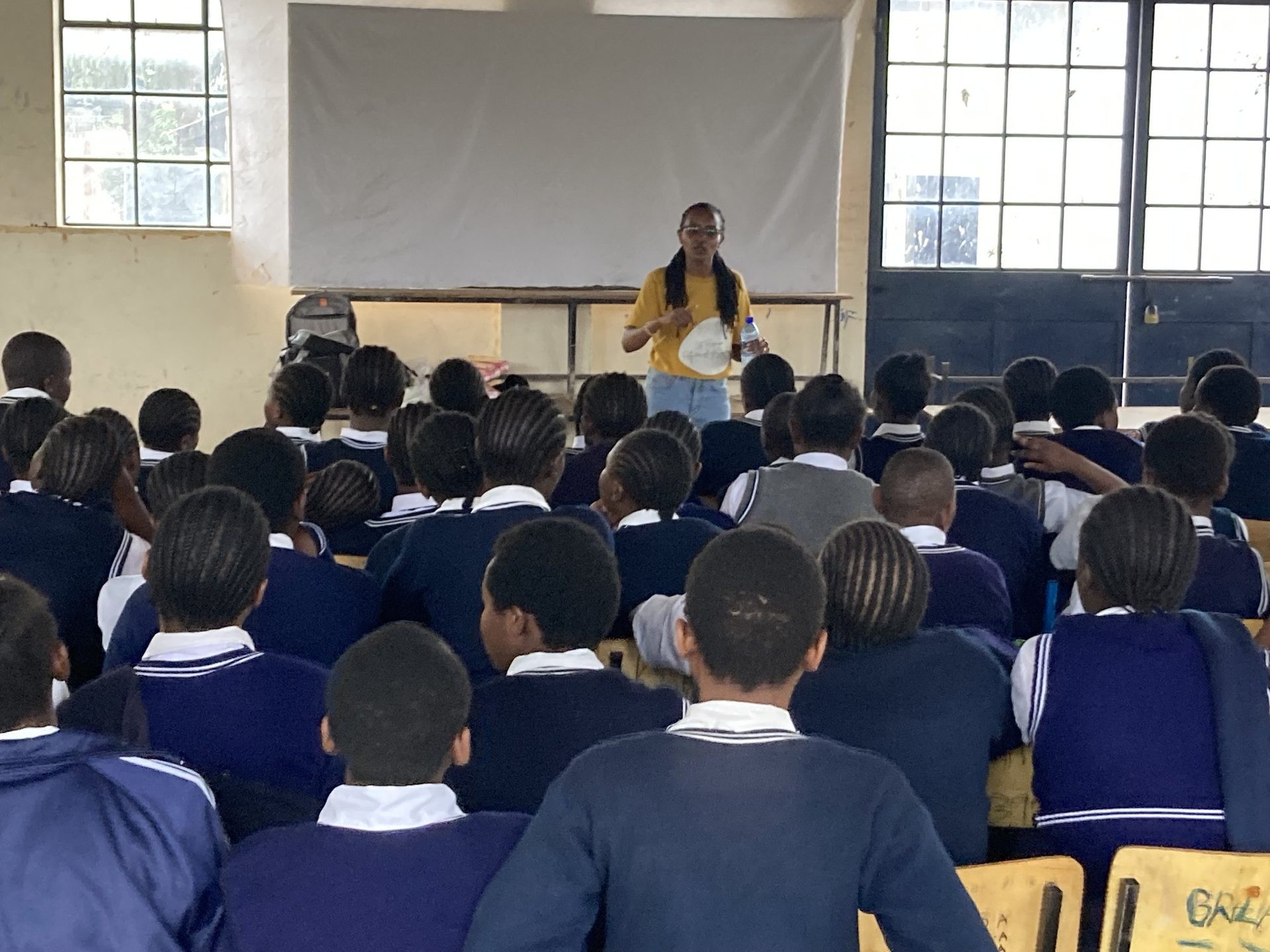
Non-Communicable Diseases
Lifestyle education, screenings, and expert-led sessions focused on hypertension, diabetes, and nutrition-related conditions affecting young people.

Sexual and Reproductive Health
Safe spaces, sexuality education, access to information and products, and referrals to health facilities and GBV support services. Built into the dispenser model and the AYP curriculum.

Mental Health
Peer support spaces, awareness sessions, and structured referrals to counsellors, health facilities, and community support systems. Partnership with Paper Hearts Foundation.
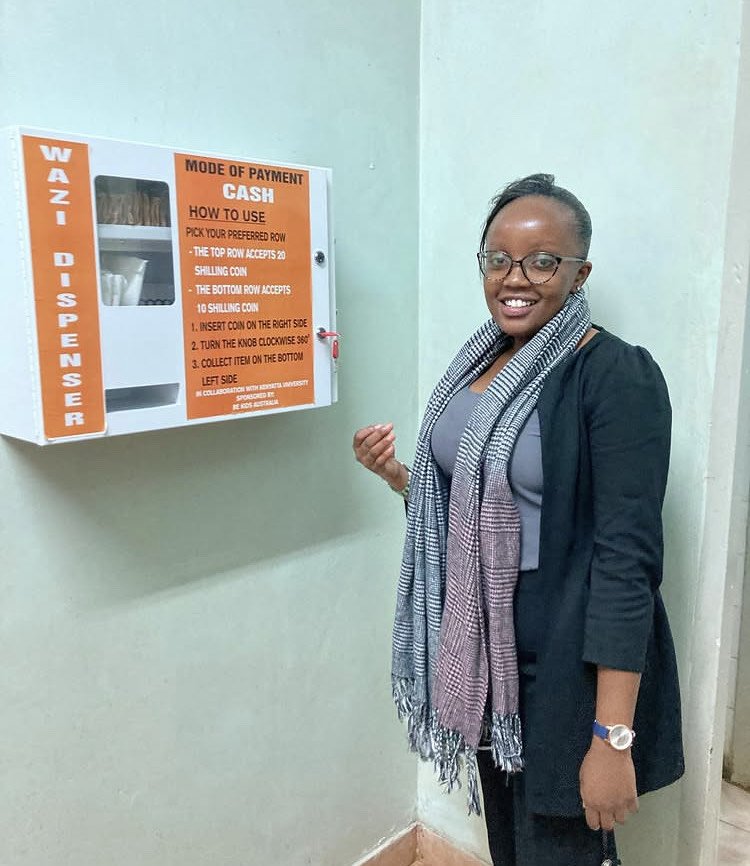
The Wazi Dispenser Model
Began in 2021 in response to persistent gaps in access to menstrual products. In 2022, with Be Kids Australia funding through the Soko Mjinga Youth Leap Enterprise Grant, Wazi piloted a low-cost, low-technology dispenser at Kenyatta University. Phase 2 has the model in 6 Ruaraka schools and one additional university.
Sub-initiatives.
Beyond Access: Research and Learning
Data from 1,400+ respondents on menstrual health attitudes and practices. Published in 2024 as Sustainable Menstrual Health Approaches for Grassroot Initiatives in Kenya (SSRN).
Read the paper8 Principles of Menstrual Health, Hygiene and Dignity
Produced at the Innovating Dignity seminar at American Corner Moi University, December 2025. Knowledge and education, access and affordability, product choice, WASH infrastructure, health and clinical care, inclusion and rights, innovation and youth leadership, governance and accountability.
Green the Red
Deliberation to Action for Sustainable Menstrual Practices, 2025 to 2026. Funded by the European Union and the Big 6 through Global Youth Mobilization. Sustainable product use, waste management, access and affordability, behavioural change.
Adopt a dispenser. Stock a school.
KES 8,500 a term covers 5 cartons of pads. KES 25,500 a year stocks one institution end-to-end.
Adopt a Dispenser