Eight years of saying "why wait?"
Wazi started at the Kenyatta University Arboretum in 2018: a small open space where young people could talk honestly about shared challenges. Today it is a registered Community-Based Organization running four thematic pillars across Nairobi and beyond.


The Arboretum
A group of friends at the Kenyatta University Arboretum Grounds created the kind of small, safe, open space they wished existed. Honest conversations about mental health, ambition, doubt, and the shared challenges of being young in Kenya.
They called it Wazi. Swahili for "open." Sheng for "we have an understanding."
Grassroots Education
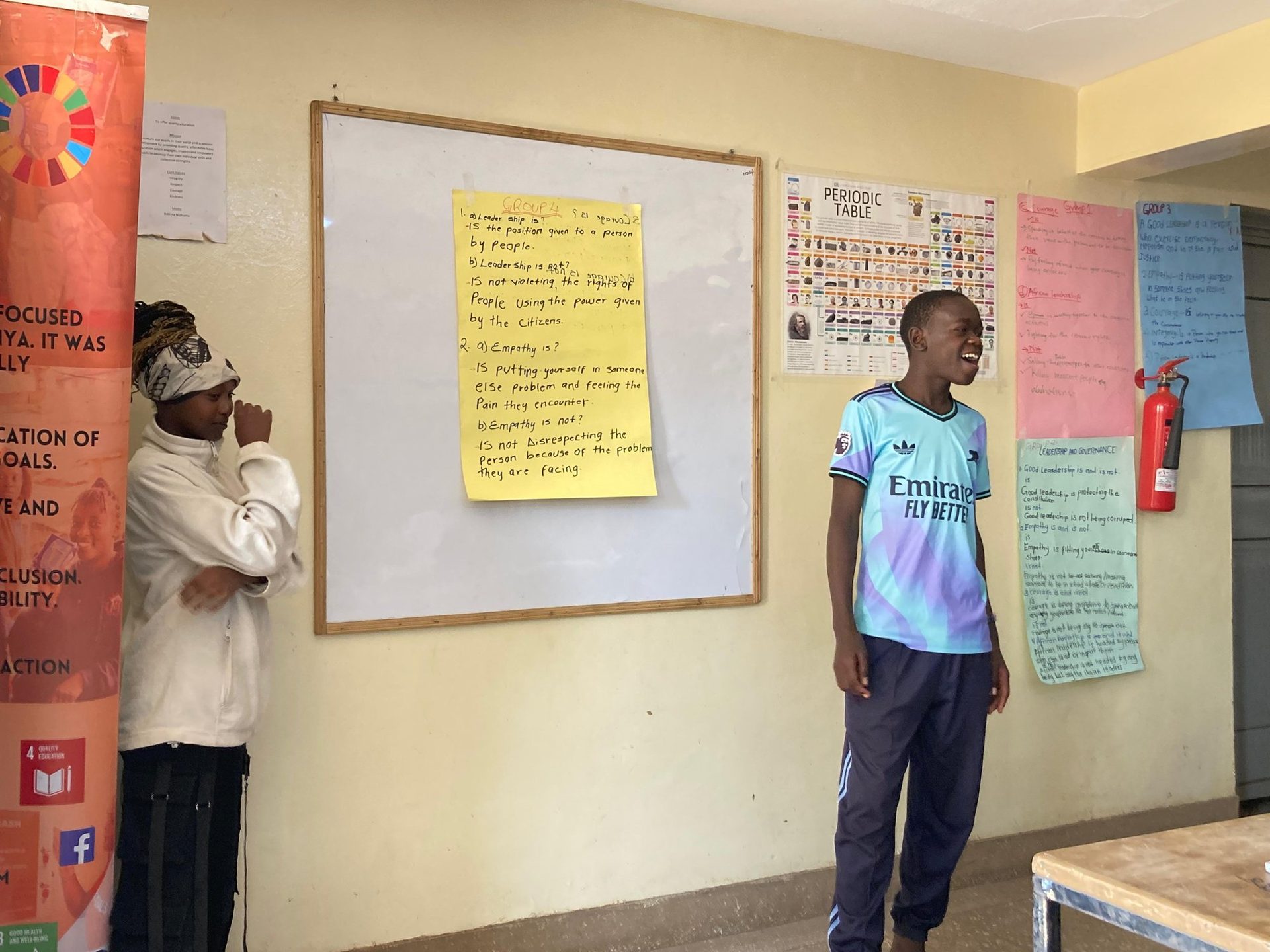
The conversations turned into work. Wazi began supporting under-resourced community learning centres: book drives, literacy campaigns, and resource mobilisation for Change a Life Learning Center, Dandora Arts and Study Center, and Ufanisi Education Center.
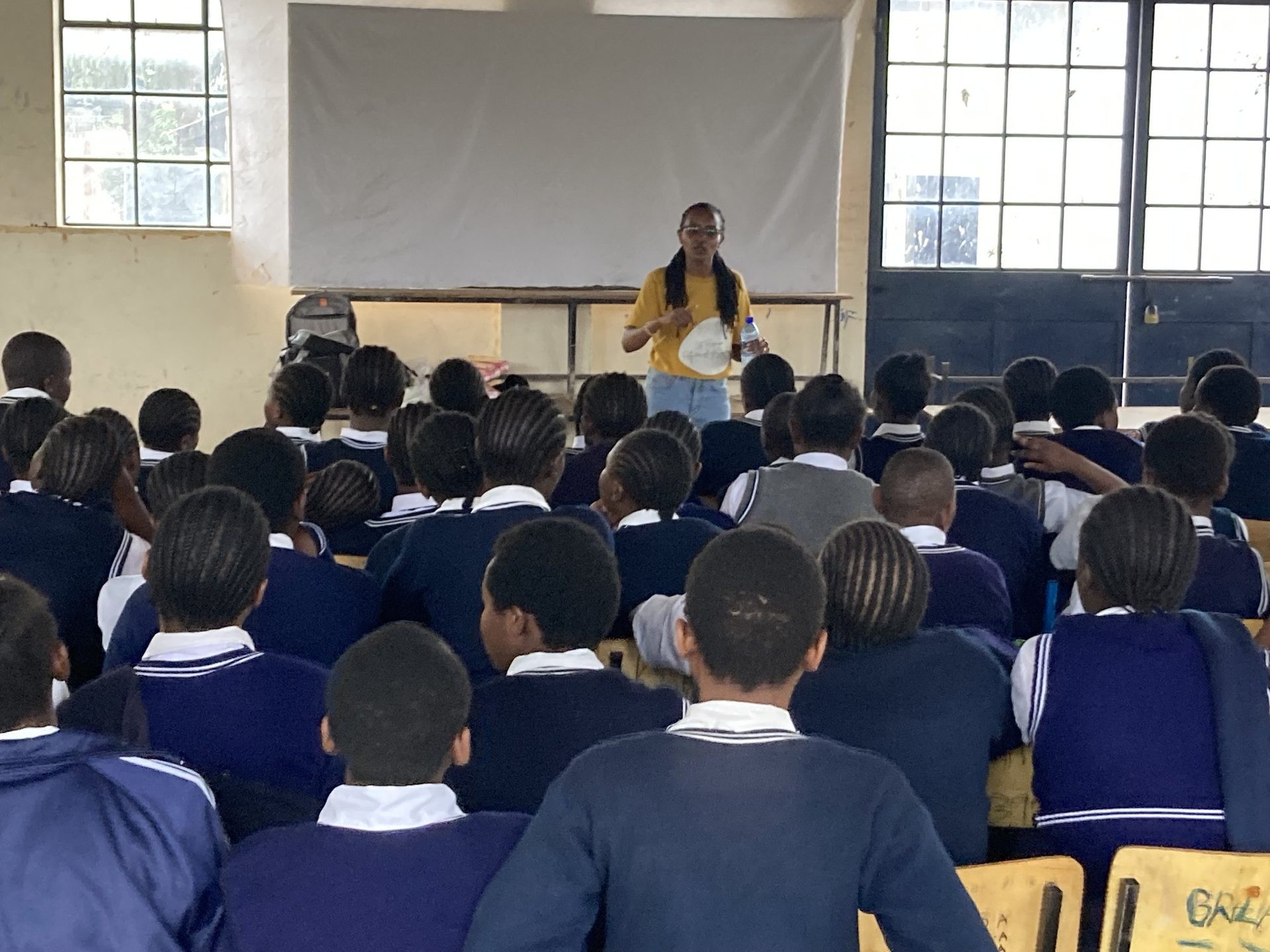
Mentorship for adolescents and young people followed. The philosophy took shape: build the structures that make help unnecessary.
Return and Strengthen
After a COVID-19 pause, Wazi returned with a stronger focus on sustainability and long-term impact. The Organizational Development and Systems Strengthening (ODSS) program, run by AMREF Kenya and NEPHAK, gave the organisation its internal systems: governance, finance, monitoring and evaluation, safeguarding.
Pilot to CBO
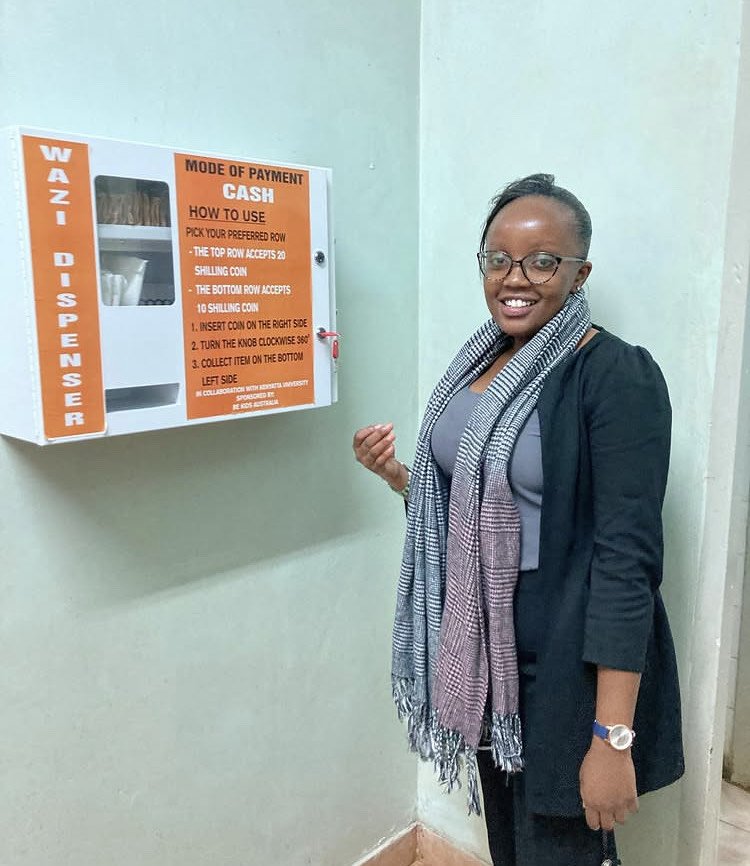
Be Kids Australia, through the Soko Mjinga Youth Leap Enterprise Grant, funded the first Wazi sanitary dispensers. Phase 1 launched at Kenyatta University in collaboration with the KU Centre for Gender Equity and Empowerment and the KU Women's Economic Empowerment Hub: 7 dispensers, 1,000+ users in year one.
In 2023, Wazi formally registered as a Community-Based Organization in Nairobi, Kenya.
Four Pillars, Open Doors
Phase 2 expanded the dispenser model into 6 schools across Ruaraka and one additional university. The Innovating Dignity seminar at American Corner Moi University produced the 8 Principles of Menstrual Health, Hygiene and Dignity. Wazi represented at UNEA-7 and the Global Major Groups and Stakeholders Forum.
From 2026, Environment joins Health, Education, and Advocacy as a fourth thematic pillar. The arboretum bench is now a platform.
Championing the domestication of the Sustainable Development Goals by enabling young people to translate global priorities into locally relevant action.
An inclusive, resilient society where young people lead and shape their communities.
Four overlapping audiences.
Wazi designs for adolescents stepping into agency, youth shaping communities, women and girls navigating health and dignity, and persons with disabilities the formal sector keeps designing around. Often the same person sits in more than one of these.
- 11–18 Adolescents
- 19–35 Youth
- & Women and girls
- & Persons with disabilities
The work, in numbers.
The people running the platform.
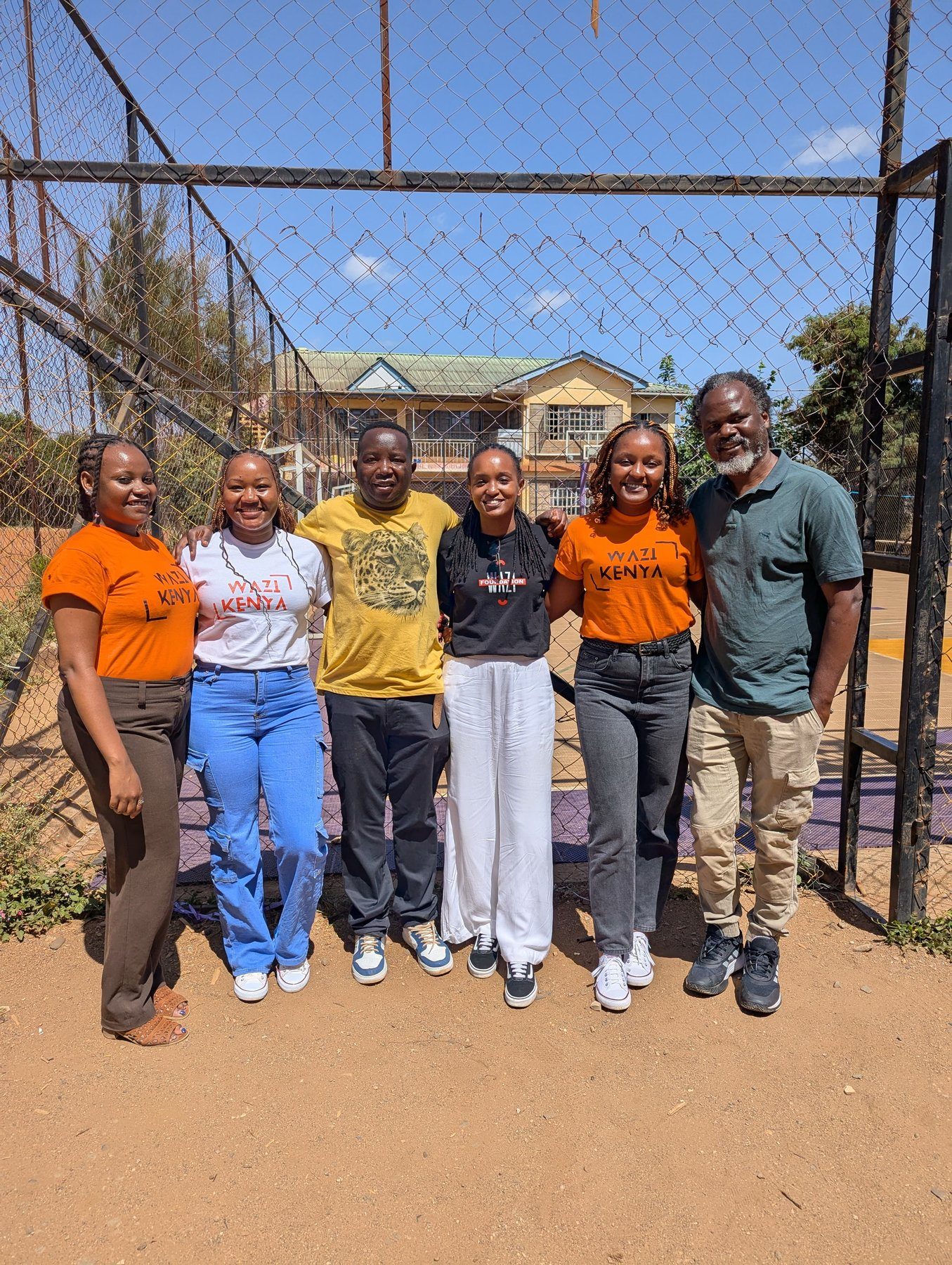
Wazi is led by a Senior Board (2026 to 2028) and a Youth Board (2026 to 2027), with day-to-day operations held by a small management team and supported by 35+ volunteers across the country.
Stephanie Njeri
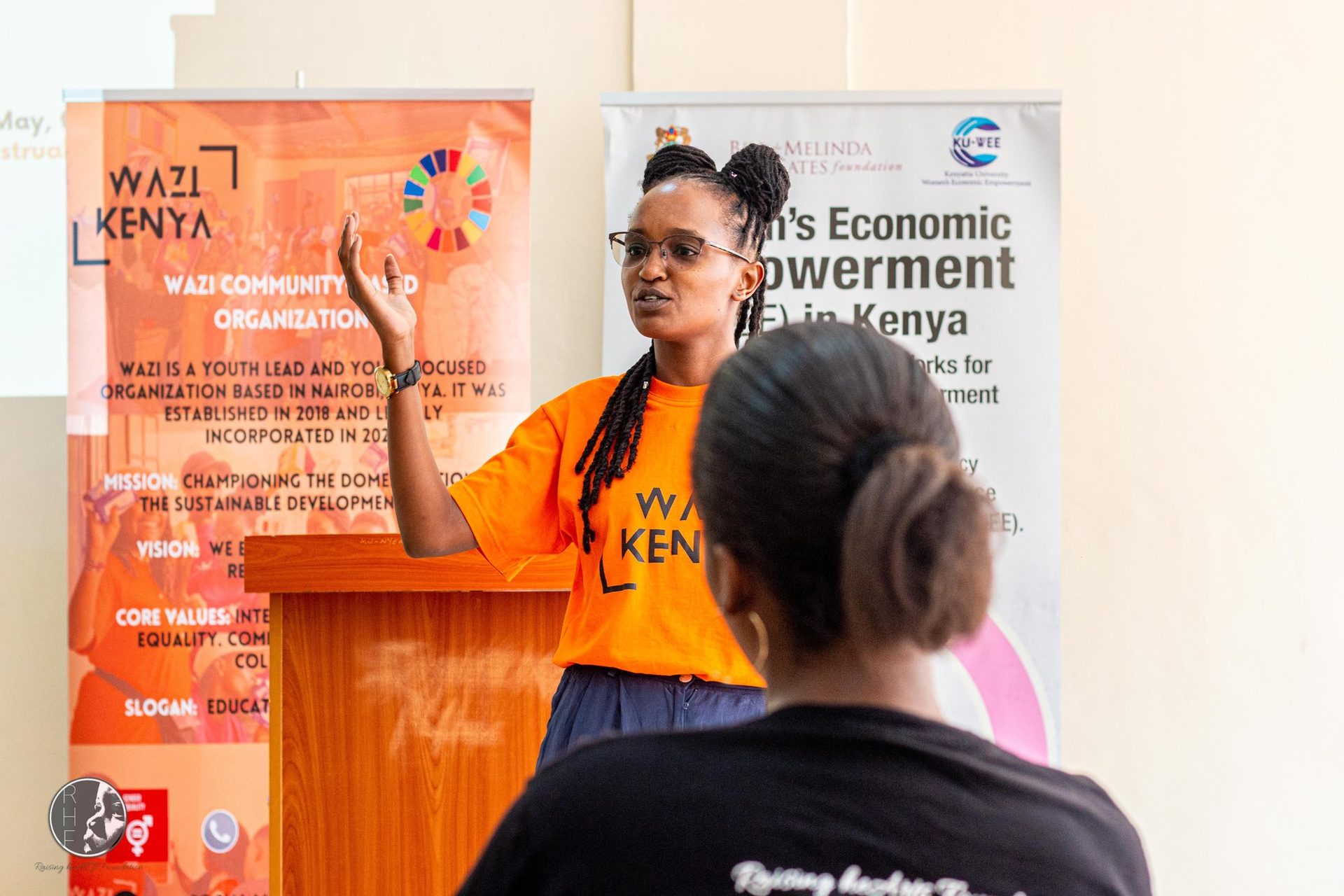
Founder & Projects LeadCo-founded Wazi at the KU Arboretum in 2018. Leads programs, partnerships, and advocacy. SDG facilitator. Authored the LinkedIn origin story that documents the journey from park bench to platform. Represented Wazi at UNEA-7 and the GMGSF.
Jacqueline Gichira
Head of OperationsHolds day-to-day operations across the four pillars: program scheduling, partner coordination, finance, compliance, and the volunteer cycle.
TracyAnn Wacuka
Operations & Compliance SupportCo-founder. Supports operations and holds the compliance line: data protection, safeguarding, M&E, and the standards Wazi runs against.
Stefany Wanjiru
Field & Projects CoordinatorField lead for Ruaraka and partner-school deployments. The person who shows up at the school gate, signs the MoA, and makes sure the dispenser is mounted level.
The volunteers who show up.
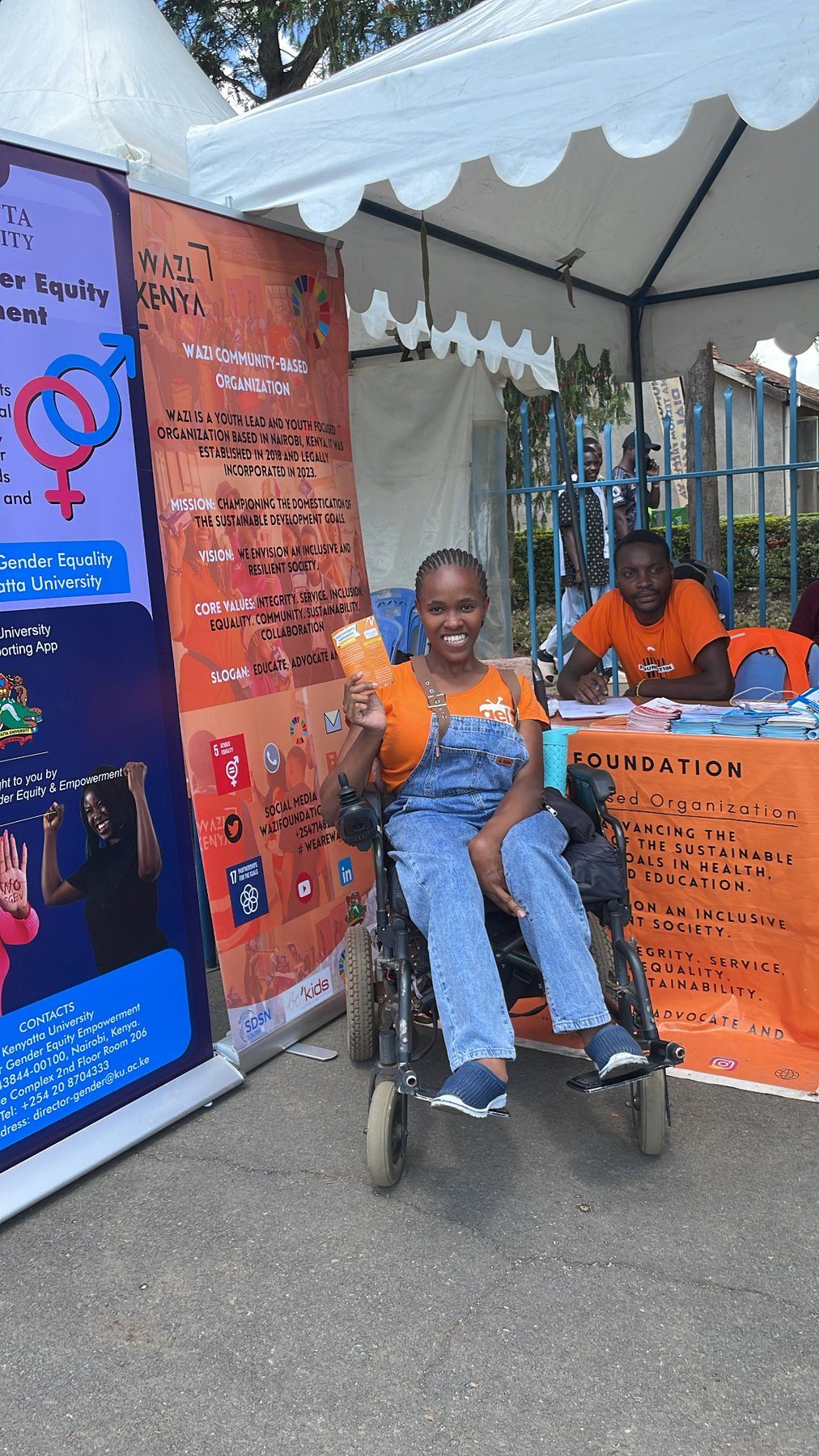
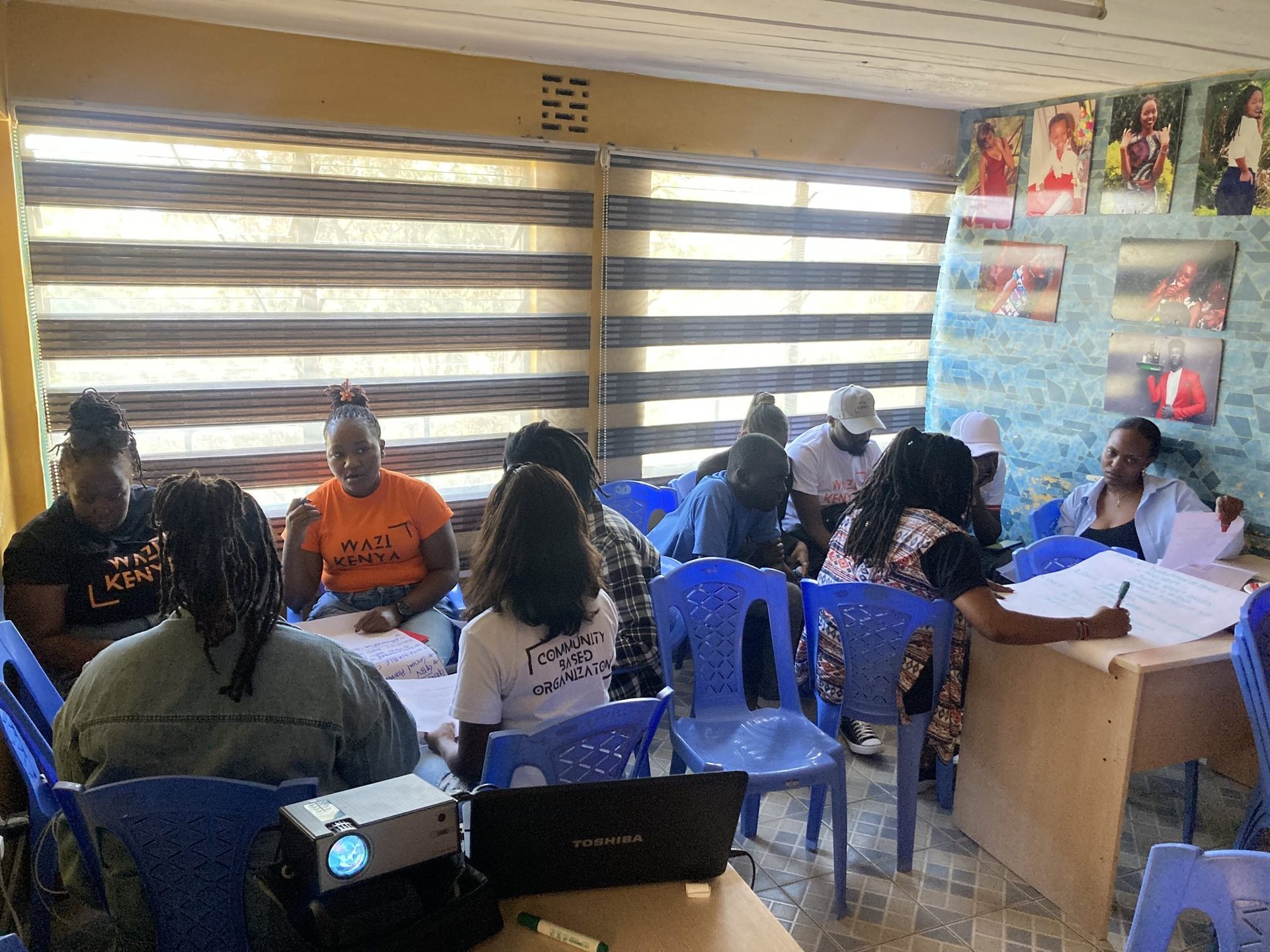
Snapshots from a 35-person volunteer network. The Wazi Core Team commits 10 to 20 hours a month to active program implementation. Friends of Wazi commit up to 5 hours a month.


Warembo wa Wazi (the women of Wazi).
The work speaks.





We work across 8 Sustainable Development Goals
Who we are
Wazi Community Based Organization (operating as Wazi Kenya) is a youth-led, registered Community-Based Organization founded in 2018 and based in Ruaraka, Nairobi, Kenya. We operate the website at wazikenya.org.
- Registered name
- Wazi Community Based Organization
- Registration no.
- HUD.GPO/KAS/CBO/08/2023/015
- Founded
- 2018, Kenyatta University Arboretum
- Location
- Ruaraka, Nairobi, Kenya
- info@wazikenya.org
- Phone
- +254 755 819 889

Carry the work
forward.
If the story landed, the next step is yours. Volunteer applications open February. The book drives, the cohorts, and the dispensers all run on people who said yes.